Guardforce AI

Why We Chose Cross-Border Travel as Our First AI for Service Case

5 min read

How DVGO Is Built to Take AI from Conversation to Execution

5 min read

A Procurement Manager from the United States lands in Hong Kong on a Monday morning. She has three days, two supplier meetings already confirmed, and a list of factories she wants to visit if time allows. She has done her research. She has a plan.

By Tuesday afternoon, the plan has fallen apart. Her first meeting overruns. The next factory, it turns out, is nearly two hours away in Shenzhen. The afternoon is already gone.

She spends the evening rebuilding the schedule herself — the same work she thought she had already done.

This is not an unusual story. It is what cross-border travel actually looks like when the gap between planning and execution has not been closed.

In this article:

• General AI is powerful — but in real-world service scenarios, it stops at the output. Execution remains the user’s problem

• Every service interaction follows the same structure: Understanding → Matching → Execution → Improve — and most AI tools only address the first step

• Travel is one of the most demanding environments to validate this architecture: ambiguous intent, long decision chains, uncertain execution conditions

• DVGO is built to close the gap between a plan that looks right and a trip that actually works

• The same architecture applies wherever service execution — not just information — is what users actually need

Why Travel Is Genuinely Hard

It is easy to underestimate how complex travel actually is as a service environment. On the surface, it looks like an information problem: find flights, find hotels, find things to do. But the reality of planning and executing a trip — especially across borders — is significantly more demanding than that.

Services are fragmented.A single trip touches dozens of independent providers: airlines, hotels, ground transportation, restaurants, local guides, visa services, insurance. None of these systems talk to each other. The traveler is the only person holding all the pieces together.

Needs are deeply personal.Two travelers going to the same city for the same number of days may need entirely different experiences. A leisure traveler and a procurement manager use similar language to describe their plans, but have entirely different priorities, schedules, and constraints. Generic recommendations serve neither of them well.

Conditions change in real time.Flights are delayed. Meetings run long. Weather shifts. A plan built the night before can be obsolete by mid-morning. The ability to adapt — quickly, with accurate information — is not a nice-to-have. It is a core part of what makes a trip work.

Cross-border uncertainty adds another layer.Traveling internationally means operating in unfamiliar regulatory environments, language barriers, different standards of service reliability, and limited local knowledge. The cost of a wrong decision — a missed connection, an unreliable vendor, a misunderstood itinerary — is higher than it would be at home. And the ability to recover is lower.

These are not problems that more information solves. They are problems that require a different kind of support entirely.

What DVGO Is Built to Do

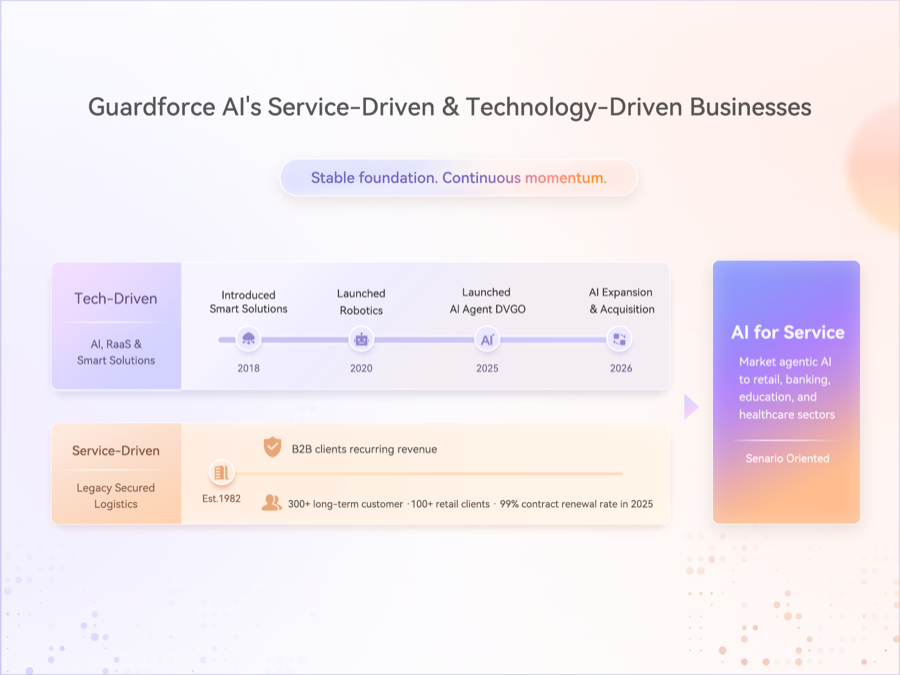
DVGO is Guardforce AI’s AI-powered cross-border travel and service assistant. It is designed around a straightforward belief: helping a traveler get accurate information is only the beginning. What they actually need is support across the full journey — from the moment they start planning to the moment they arrive home.

That means four things in practice.

Itinerary planning and arrangement.DVGO helps users move from a general intention — “I need to visit suppliers in three cities over five days” — to a structured, realistic plan that accounts for logistics, timing, and priorities. Not a list of suggestions, but a workable sequence of decisions.

Real-time adjustment during the trip.When conditions change — and they always do — DVGO supports the traveler in adapting. A meeting that runs long, a transfer that falls through, a venue that is unexpectedly closed: these are the moments where the gap between planning and execution is felt most sharply. DVGO is designed to be useful precisely at those moments.

Local service and application connection.Planning is only valuable if it connects to real services. DVGO works to surface options for accommodation, ground transport, dining, and local activities that are consistent with the traveler’s plan and context — not generic recommendations detached from the actual itinerary.

Cross-border travel support and on-the-ground resources.Cross-border travelers need more than itineraries. They need information about entry requirements, local norms, reliable vendors, and practical logistics that only comes from genuine local knowledge. DVGO is built to integrate that kind of support into the travel experience.

Underlying all of this is a four-layer architecture — Understanding, Matching, Execution, Improve — that moves AI from generating a response to supporting a process. Each layer builds on the last, and the system learns from every interaction to become more useful over time.

DVGO - AI Assistant for Travel

Try DVGO

Why We Started with Travel

Travel is not the easiest consumer service category to start with. It is one of the hardest.

That is exactly why we chose it.

If Agentic AI can create genuine value in an environment as fragmented, personal, real-time, and uncertain as cross-border travel — if it can support a user not just in planning but in executing, adapting, and completing a complex multi-day experience across an unfamiliar environment — then the methodology is proven in one of the most demanding conditions it will face.

The same structural challenges that make travel hard exist across many other service industries. Healthcare access requires navigating fragmented providers, personal medical histories, and time-sensitive decisions. Procurement and sourcing involve evaluating options under time pressure in unfamiliar markets. Education planning spans institutions, timelines, and requirements that vary by individual and context.

In each of these cases, the gap between information and execution is real. And in each of them, closing that gap — not just providing better information, but supporting the full process from intention to outcome — is where the actual value lies.

Travel is where we are building and validating that capability. It will not be where we stop.

What Comes Next

The Procurement Manager from our opening eventually made her trip work. She adapted, rescheduled, and found a way through — as experienced travelers always do. But the hours she spent rebuilding her schedule that Tuesday evening were hours she could not spend on the work she had traveled to do.

That gap — between a plan that exists and a trip that actually works — is what DVGO is designed to close.

AI for Service is not about replacing human judgment. It is about making sure that when people need to get something done in a complex, unfamiliar environment, they have the support to do it.

Travel is our first test case. We are building for what comes next.

Each week, we share perspectives on AI for Service, Smart Solutions, AI-powered travel, and the real-world service industries we operate in.


AI ApplicationAgentic AI
Business Insights

Recent Posts

See All
Guardforce AI
Guardforce AI
All News
All NewsCompany UpdatesBusiness Insights

Why We Chose Cross-Border Travel as Our First AI for Service Case

5 min read

How DVGO Is Built to Take AI from Conversation to Execution

5 min read

A Procurement Manager from the United States lands in Hong Kong on a Monday morning. She has three days, two supplier meetings already confirmed, and a list of factories she wants to visit if time allows. She has done her research. She has a plan.

By Tuesday afternoon, the plan has fallen apart. Her first meeting overruns. The next factory, it turns out, is nearly two hours away in Shenzhen. The afternoon is already gone.

She spends the evening rebuilding the schedule herself — the same work she thought she had already done.

This is not an unusual story. It is what cross-border travel actually looks like when the gap between planning and execution has not been closed.

In this article:

• General AI is powerful — but in real-world service scenarios, it stops at the output. Execution remains the user’s problem

• Every service interaction follows the same structure: Understanding → Matching → Execution → Improve — and most AI tools only address the first step

• Travel is one of the most demanding environments to validate this architecture: ambiguous intent, long decision chains, uncertain execution conditions

• DVGO is built to close the gap between a plan that looks right and a trip that actually works

• The same architecture applies wherever service execution — not just information — is what users actually need

Why Travel Is Genuinely Hard

It is easy to underestimate how complex travel actually is as a service environment. On the surface, it looks like an information problem: find flights, find hotels, find things to do. But the reality of planning and executing a trip — especially across borders — is significantly more demanding than that.

Services are fragmented.A single trip touches dozens of independent providers: airlines, hotels, ground transportation, restaurants, local guides, visa services, insurance. None of these systems talk to each other. The traveler is the only person holding all the pieces together.

Needs are deeply personal.Two travelers going to the same city for the same number of days may need entirely different experiences. A leisure traveler and a procurement manager use similar language to describe their plans, but have entirely different priorities, schedules, and constraints. Generic recommendations serve neither of them well.

Conditions change in real time.Flights are delayed. Meetings run long. Weather shifts. A plan built the night before can be obsolete by mid-morning. The ability to adapt — quickly, with accurate information — is not a nice-to-have. It is a core part of what makes a trip work.

Cross-border uncertainty adds another layer.Traveling internationally means operating in unfamiliar regulatory environments, language barriers, different standards of service reliability, and limited local knowledge. The cost of a wrong decision — a missed connection, an unreliable vendor, a misunderstood itinerary — is higher than it would be at home. And the ability to recover is lower.

These are not problems that more information solves. They are problems that require a different kind of support entirely.

What DVGO Is Built to Do

DVGO is Guardforce AI’s AI-powered cross-border travel and service assistant. It is designed around a straightforward belief: helping a traveler get accurate information is only the beginning. What they actually need is support across the full journey — from the moment they start planning to the moment they arrive home.

That means four things in practice.

Itinerary planning and arrangement.DVGO helps users move from a general intention — “I need to visit suppliers in three cities over five days” — to a structured, realistic plan that accounts for logistics, timing, and priorities. Not a list of suggestions, but a workable sequence of decisions.

Real-time adjustment during the trip.When conditions change — and they always do — DVGO supports the traveler in adapting. A meeting that runs long, a transfer that falls through, a venue that is unexpectedly closed: these are the moments where the gap between planning and execution is felt most sharply. DVGO is designed to be useful precisely at those moments.

Local service and application connection.Planning is only valuable if it connects to real services. DVGO works to surface options for accommodation, ground transport, dining, and local activities that are consistent with the traveler’s plan and context — not generic recommendations detached from the actual itinerary.

Cross-border travel support and on-the-ground resources.Cross-border travelers need more than itineraries. They need information about entry requirements, local norms, reliable vendors, and practical logistics that only comes from genuine local knowledge. DVGO is built to integrate that kind of support into the travel experience.

Underlying all of this is a four-layer architecture — Understanding, Matching, Execution, Improve — that moves AI from generating a response to supporting a process. Each layer builds on the last, and the system learns from every interaction to become more useful over time.

DVGO - AI Assistant for Travel

Try DVGO

Why We Started with Travel

Travel is not the easiest consumer service category to start with. It is one of the hardest.

That is exactly why we chose it.

If Agentic AI can create genuine value in an environment as fragmented, personal, real-time, and uncertain as cross-border travel — if it can support a user not just in planning but in executing, adapting, and completing a complex multi-day experience across an unfamiliar environment — then the methodology is proven in one of the most demanding conditions it will face.

The same structural challenges that make travel hard exist across many other service industries. Healthcare access requires navigating fragmented providers, personal medical histories, and time-sensitive decisions. Procurement and sourcing involve evaluating options under time pressure in unfamiliar markets. Education planning spans institutions, timelines, and requirements that vary by individual and context.

In each of these cases, the gap between information and execution is real. And in each of them, closing that gap — not just providing better information, but supporting the full process from intention to outcome — is where the actual value lies.

Travel is where we are building and validating that capability. It will not be where we stop.

What Comes Next

The Procurement Manager from our opening eventually made her trip work. She adapted, rescheduled, and found a way through — as experienced travelers always do. But the hours she spent rebuilding her schedule that Tuesday evening were hours she could not spend on the work she had traveled to do.

That gap — between a plan that exists and a trip that actually works — is what DVGO is designed to close.

AI for Service is not about replacing human judgment. It is about making sure that when people need to get something done in a complex, unfamiliar environment, they have the support to do it.

Travel is our first test case. We are building for what comes next.

Each week, we share perspectives on AI for Service, Smart Solutions, AI-powered travel, and the real-world service industries we operate in.
AI ApplicationAgentic AI
Business Insights

Recent Posts

See All